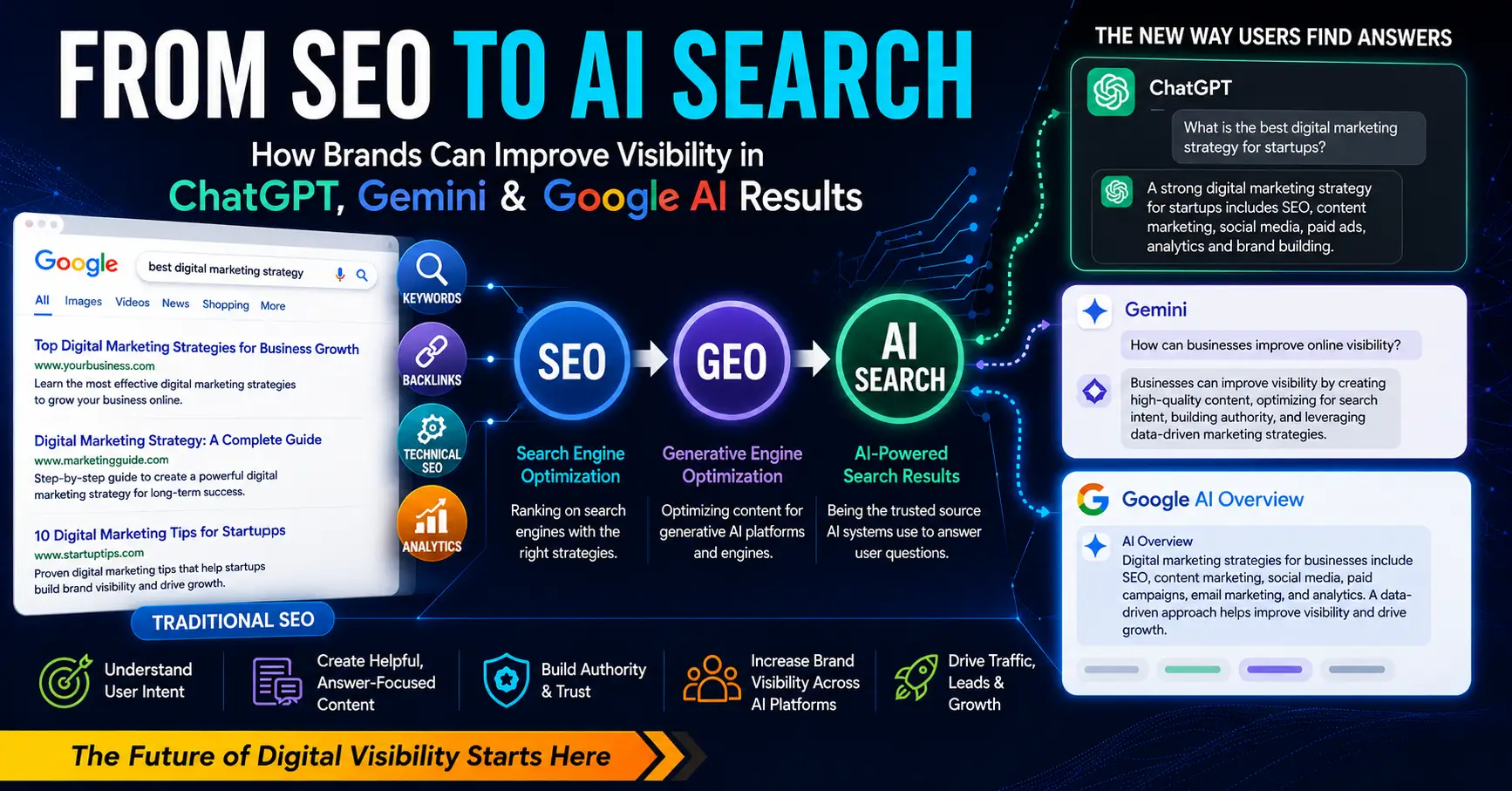
Search behaviour is changing faster than ever. For years, brands focused on ranking higher on Google through traditional SEO practices like keyword optimization, backlinks, technical improvements, and content creation. While these strategies are still important, the way people discover information online is evolving.
Today, users are not only searching through traditional search engines. They are asking AI-powered platforms like ChatGPT, Gemini, and Google AI Overviews to find answers, compare options, and make decisions. This shift has created a new challenge for brands: how do you stay visible when search results are no longer limited to a list of blue links?
This is where AI search optimization becomes important. Brands now need strategies that help their content appear in AI-generated answers while continuing to perform well in traditional search.
The Evolution From SEO to AI Search
Traditional SEO has always focused on helping search engines understand and rank website content. Businesses optimized pages around keywords, improved website performance, built authority, and created valuable content to attract organic traffic.
AI search works differently.
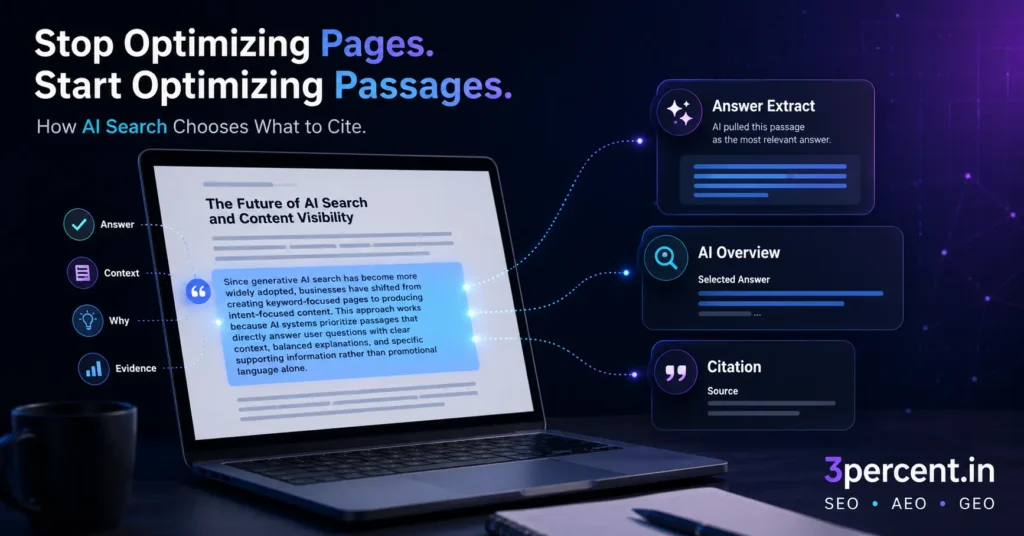
Instead of simply showing websites, AI platforms analyze multiple sources, understand user intent, and provide direct answers. This means brands need to think beyond rankings and focus on becoming reliable sources of information.
For example, a user searching “best digital marketing strategy for startups” may not click through multiple websites. Instead, they may ask an AI assistant and receive a summarized answer based on different trusted sources.
The question brands need to ask is:
“Is our content strong enough for AI systems to recognize and recommend?”
What Is AI Search Optimization?
AI search optimization is the process of improving your online content so that AI-powered search platforms can understand, trust, and reference your brand.
Unlike traditional SEO, which mainly focuses on ranking pages, AI search optimization focuses on:
- Creating clear and useful information
- Answering real customer questions
- Building brand authority
- Improving content quality
- Helping AI systems understand your expertise
AI platforms look for content that demonstrates experience, relevance, and credibility. This makes high-quality content more important than ever.
Understanding Generative Engine Optimization (GEO)
One of the biggest emerging concepts in digital marketing is Generative Engine Optimization (GEO).
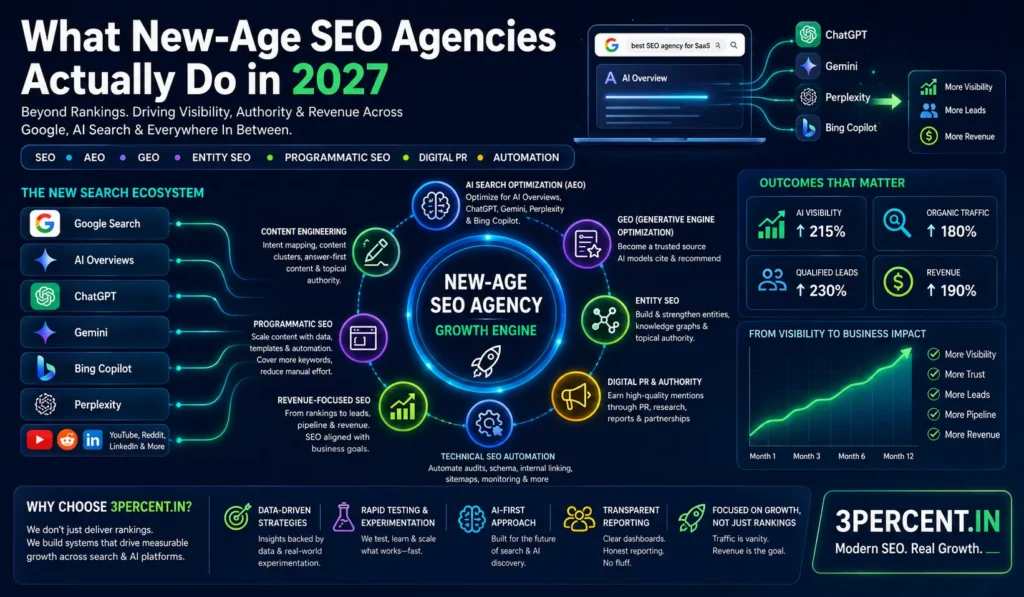
GEO focuses on optimizing content for generative AI platforms such as ChatGPT, Gemini, and AI-powered search experiences. The goal is to increase the chances of your brand being included in AI-generated responses.
While traditional SEO asks:
“How can we rank higher?”
GEO asks:
“How can businesses create content that AI systems identify as valuable and trustworthy?”
A strong GEO strategy includes:
1. Creating Helpful, Detailed Content
AI systems prefer content that provides complete answers. Short, generic articles may not provide enough context for AI platforms to understand your expertise.
Brands should focus on creating content that explains topics clearly, solves problems, and provides genuine value.
2. Building Topical Authority
AI search does not only look at individual pages. It considers whether a brand consistently covers a specific subject.
For example, a brand discussing digital marketing should create content around SEO, content strategy, AI marketing, analytics, paid campaigns, and customer behaviour.
A connected content ecosystem helps strengthen authority.
3. Improving Content Structure
Well-structured content is easier for both users and AI systems to understand.
Using:
- Clear headings
- FAQs
- Short paragraphs
- Relevant examples
- Structured information
can improve content visibility across search experiences.
How Brands Can Optimize Content for AI Search
To optimize content for AI search, brands need to focus on user intent rather than only keywords.
Here are some practical strategies:
Create Answer-Focused Content
People use AI tools differently from traditional search. Instead of typing short keywords, they ask detailed questions.
Brands should create content that answers:
- What is the solution?
- Why does it matter?
- How can businesses implement it?
- What mistakes should they avoid?
Strengthen Brand Authority
AI platforms are more likely to trust brands that demonstrate expertise.
This can be improved through:
- Expert-written content
- Industry insights
- Case studies
- Original research
- Consistent publishing
Maintain Strong SEO Foundations
Even with AI search growth, traditional SEO remains essential.
Technical SEO, website experience, internal linking, and quality backlinks continue to support online visibility.
The future is not SEO versus AI search. It is SEO combined with AI-focused strategies.
Developing an AI SEO Strategy for the Future
An effective AI SEO strategy requires brands to rethink how they create and distribute content.
Some important areas include:
Focus on Search Intent
Understanding what users want is more valuable than targeting individual keywords.
Brands should create content based on customer problems, questions, and decision-making journeys.
Create Content Clusters
A strong content strategy includes pillar pages and supporting articles that cover a topic in depth.
This helps search engines and AI platforms understand your expertise.
Monitor Changing Search Behaviour
Search trends will continue to evolve. Brands need to regularly analyze how audiences search and update their strategies accordingly.
The Future of SEO With AI
The future of SEO with AI will be focused on visibility, authority, and trust.
Search will become more conversational, personalized, and answer-driven. Brands that only focus on rankings may struggle to compete, while those investing in valuable content and strong digital experiences will continue to grow.
AI will not eliminate SEO. Instead, it will redefine what successful SEO looks like.
The brands that adapt will be the ones that understand one simple principle:
Being visible online is no longer just about appearing in search results. It is about becoming the answer people and AI systems trust.
The transition from SEO to AI search represents one of the biggest changes in digital marketing. Platforms like ChatGPT, Gemini, and Google AI Overviews are changing how users discover information, and brands need to evolve with this transformation.
By investing in AI search optimization, Generative Engine Optimization (GEO), and a future-ready AI SEO strategy, businesses can improve their visibility, build stronger digital authority, and stay competitive in the changing search landscape.
Source: Google Search Central – A New Resource for Optimizing for AI Search Experiences
Google’s View on AI Search Optimization
As AI-powered search experiences continue to evolve, Google has also emphasized the importance of creating content that is genuinely helpful, original, and people-first.
In its latest guidance on optimizing for AI-powered search experiences, Google explains that businesses should focus on creating valuable content, demonstrating expertise, building topical authority, and organizing information in ways that are easy for both users and AI systems to understand.
Google also highlights that brands should avoid creating large volumes of repetitive content purely for rankings and instead focus on unique insights, first-hand experience, and content that provides real value to audiences.
Looking to Improve Your Visibility in AI Search Results?
At 3% Collective Performance & SEO Agency in Bengaluru (Three Percent Collective), we help brands adapt to this evolving digital ecosystem through a combination of strategic thinking, creativity, and technology. Our services include Content Creation, SEO, Media Planning & Buying, E-commerce Growth, Experiential Marketing, and Website Development helping brands build meaningful connections, improve online visibility, and create sustainable growth in the digital era.